
Bosch UniversalChain 18: Chain comes off bar - Diagnosis
Generated by ReeFix AI · Sources: technical and specialist documentation (see Sources section)
Revision of 25/06/2026
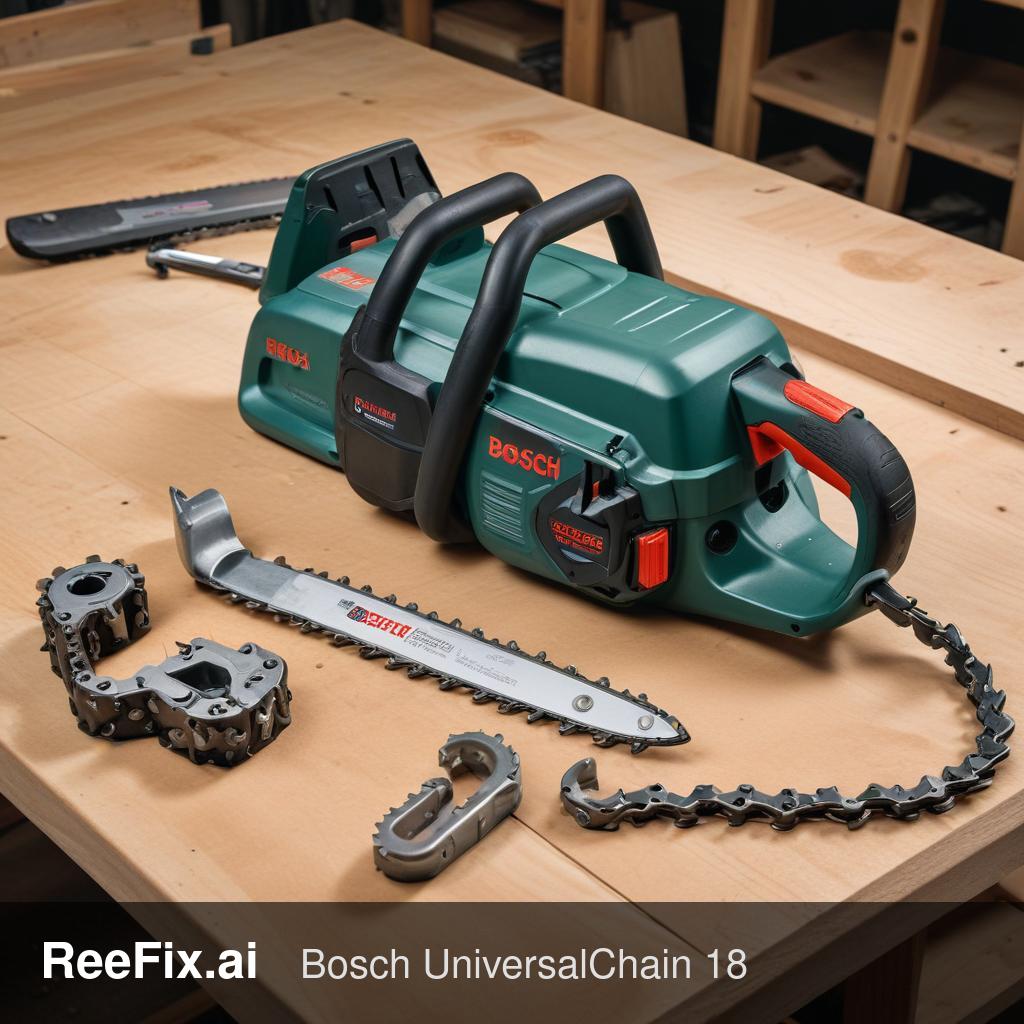
⚠️ SAFETY WARNING. Before any inspection, cleaning, or maintenance on the Bosch UniversalChain 18 chainsaw, always remove the 18V battery to prevent accidental engine startup. Always wear robust work gloves to protect against the risk of severe cuts from the sharp chain teeth. Never touch the chain or bar immediately after use to avoid burns. ReeFix provides this diagnosis EXCLUSIVELY for educational and informational purposes.
### BEFORE THE FAILURE
Often, the problem of the chain coming off the bar is not sudden, but the culmination of progressive wear or inadequate maintenance. Before the failure manifests systematically, you might have noticed:
- Difficulty in tensioning (60-75%): The SDS knob on your Bosch UniversalChain 18 might have become less effective at securely locking the bar. Perhaps you had to tighten it multiple times, or the chain loosened more quickly than usual after a few cuts. This is an early sign of wear in the Bosch UniversalChain 18 SDS tensioning assembly (internal pin or ratchet).
- Lack of lubrication (20-30%): An oil tank that is always full but with minimal consumption, or a bar and chain that overheat excessively to the touch even after short uses, indicate a problem with the lubrication system. The chain, by overheating, stretches and loses tension. An accumulation of sawdust in the lubrication channel is a common error.
- Prolonged or heavy use (10-15%): Frequent cuts, on hard woods or with suboptimal techniques (e.g., angled cuts that twist the bar), accelerate the wear of the Bosch UniversalChain 18 guide bar (widening of the groove) and the Bosch UniversalChain 18 replacement chain itself.
### AT THE TIME OF FAILURE
When the chain comes off the bar, the event is almost always accompanied by clear signals:
- Sudden loss of tension (High probability): While cutting, you feel the chain "slap" or become visibly loose. The bar might retract slightly towards the motor body, even if the SDS knob had been tightened. This is the main symptom of an SDS mechanism that no longer holds tension under load. The tensioning pin fails to keep the bar in position, allowing the chain to loosen and derail.
- Derailment during cutting (Very high probability): The chain jumps out of the bar groove, especially during cuts that apply lateral force or when wood resistance is greater. This indicates excessive play between the drive links and the bar groove (bar wear) or insufficient tension.
- Overheating and burning smell (Medium probability): If the chain comes off after a short period of intense use, and you notice that the bar and chain are very hot, with a possible burning smell, it is a strong indicator of poor lubrication. The chain stretches thermally much more than normal, exceeding the compensation capacity of the SDS system.
### AFTER THE EVENT
Once the chain has come off, your subsequent observations are crucial for diagnosis:
- Quick tensioning check: Try to re-tension the chain with the SDS knob. If you feel the knob spinning freely or not "engaging" properly, or if the chain loosens again almost immediately without even starting the chainsaw (or with minimal manual pulling), the problem is almost certainly in the SDS assembly (45% probability).
- Estimated replacement cost (SDS only): €25-€40. Difficulty: Medium, requires attention.
- Guide bar check: With the chain removed, inspect the bar groove. If you see that it is visibly widened, or if the chain's drive links have excessive lateral play when inserted, the bar is worn (30% probability). A technician would measure the groove width (it should be 1.1 mm).
- Estimated replacement cost (bar only): €20-€40. Difficulty: Low, easy replacement.
- Lubrication check: Check that the oil tank empties regularly during use and that Bosch chain lubricant oil flows from the hole on the bar when the chainsaw is running (even at idle, pointing at a clear surface). If there is no flow or it is minimal, the lubrication system is clogged or defective (15% probability). Cleaning the channels can solve it.
- Estimated cost: Low (cleaning, oil). Difficulty: Low-Medium.
- Chain inspection: Ensure the chain is correct (3/8" pitch, 1.1 mm link thickness) and does not have deformed links or loose rivets (10% probability). An unsuitable or very worn chain can jump even with correct tensioning.
- Estimated replacement cost (chain only): €15-€25. Difficulty: Low.
OPERATIONAL CONCLUSION: If the chain loosens immediately after tensioning or during the first cuts (without excessive overheating), the highest probability (45%) is a fault in the Bosch UniversalChain 18 SDS tensioning assembly. If the chain has excessive lateral play in the bar, even if tensioned, or derails in angled cuts, then the Bosch UniversalChain 18 guide bar is worn (30%). In both these cases, professional technical intervention is recommended, with a spare parts cost between €15 and €55 (depending on whether only the chain, the bar, or the entire SDS assembly is replaced) and labor between €30 and €50. If, however, the problem is mainly related to overheating and poor lubrication, try cleaning the oil channels and using new Bosch chain lubricant oil, which you can do yourself. If the sum of repair costs (parts + labor) exceeds €70-€90, consider replacing the entire chainsaw, as the cost of a new bare tool is around €110-€130.
Why does my Bosch UniversalChain 18 chain keep coming off?
Common causes include wear in the SDS tensioning assembly, inadequate chain lubrication leading to stretching, or a worn guide bar/sprocket.
What are early signs of a chainsaw chain coming off?
Difficulty maintaining chain tension, frequent re-tensioning, or excessive overheating of the bar and chain are often precursors to this issue.
When should I seek professional help for a chainsaw chain coming off?
If you've checked basic tension and lubrication and the problem persists, or if you suspect internal component wear, professional diagnosis is recommended.
This diagnostic report is generated using an artificial intelligence system (RAG) based on the aggregation of online data. The moderation by Luca Chia (Electronic Expert) validates its logical coherence and technical plausibility regarding the described symptoms, confirming the correctness of the AI's diagnostic reasoning, without however constituting an absolute guarantee of resolution for individual cases.