
De'Longhi Pinguino PAC EX120 EC Error Diagnosis and Solution
Validated by Luca Chia, Certified Electronic Technician
Revision of 02/05/2026
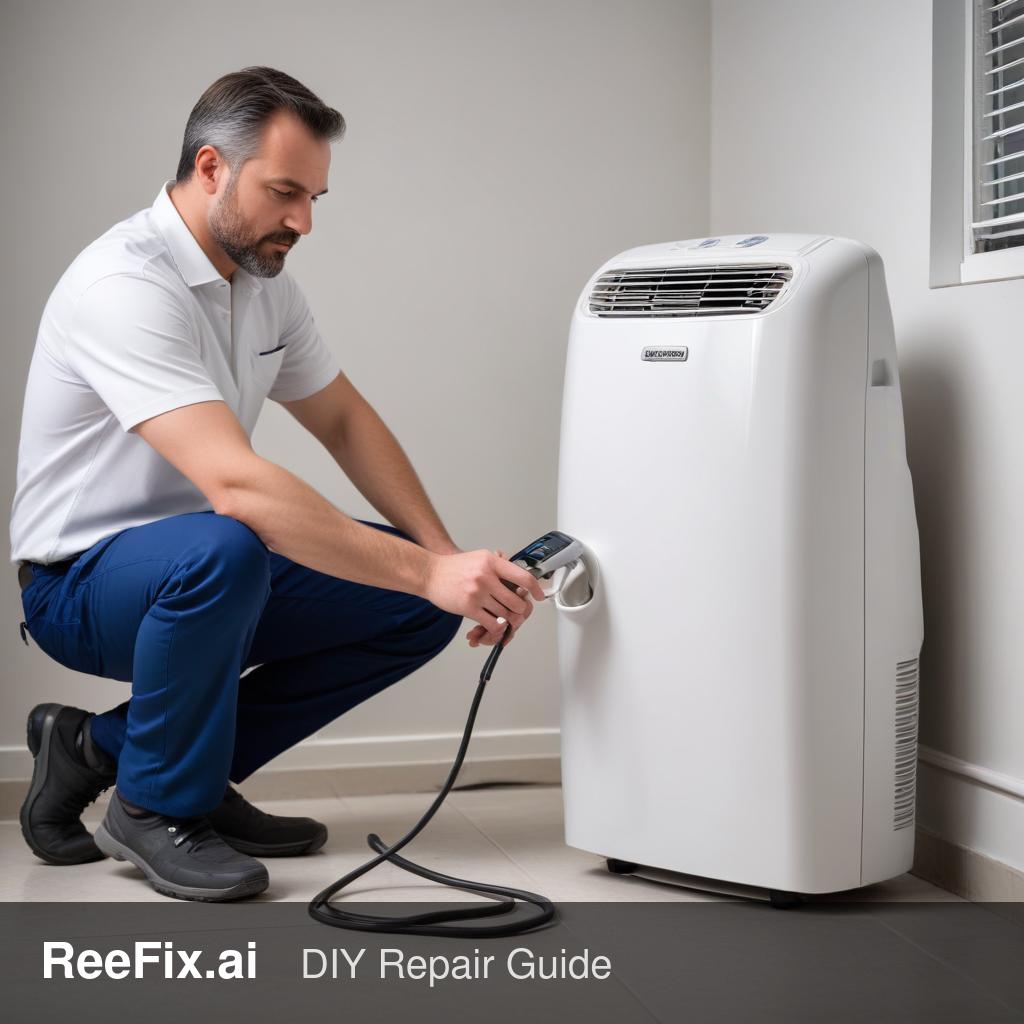
⚠️ WARNING / SERIOUS RISK. This appliance operates with critical and dangerous components (High Voltage, Temperatures, or Gas). Improvised DIY repairs on critical devices can be fatal or prohibited by law. Physical intervention requires qualified specialized technicians to issue compliant safety certificates. ReeFix provides this diagnosis EXCLUSIVELY for educational and informational purposes.
Your De'Longhi Pinguino PAC EX120 turns on, the compressor hums, but after 15-20 minutes "EC" appears and the unit does not cool. The expelled air is not cold.
QUICK TEST
To isolate the cause of the "EC" error, perform these practical steps (unit always unplugged from power):
- Complete Draining: Locate the drain plug (usually on the back/bottom) and completely drain the water from the internal tank. Reconnect the unit and restart. If the error disappears, the problem is in condensation management: full tank, sensor, or pump.
- Check Level Sensor: Inspect the level sensor (float) inside the tank. It must move freely, without blockages from dirt or limescale.
- Condensate Pump Inspection (if present): Check the impeller of the condensate pump for obstructions. Also check the drain pipes for kinks or blockages.
- Air Filter Cleaning: Remove and thoroughly clean the air filters from dust and lint.
IMMEDIATE DIAGNOSIS
The "EC" error on the De'Longhi Pinguino PAC EX120, with the compressor active but no cooling, almost always indicates a problem in the condensation management system. Here are the most probable causes:
- 70% Full Tank or Faulty Level Sensor: The internal tank has reached maximum capacity, or the level sensor (float) is stuck in the "full" position or is defective. The system blocks to prevent water leaks.
- 15% Blocked or Faulty Condensate Pump: If the model includes a condensate pump for continuous drainage, an obstruction or malfunction prevents water disposal, rapidly saturating the internal tank.
- 10% Dirty Air Filters / Reduced Airflow: Clogged air filters drastically reduce heat exchange, causing excessive evaporator cooling and excessive condensation formation.
MOST PROBABLE DIAGNOSIS
In the vast majority of cases (70%), the "EC" error stems from a full internal condensate tank or a malfunction of the level sensor. Often, it is sufficient to manually drain the unit or free the float stuck by some dirt or limescale to solve the problem.
REAL CASES
Here's how the "EC" error manifests in common situations:
- Scenario 1 (70%): After months of inactivity, you turn on the Pinguino. The compressor starts regularly, but after about 20 minutes "EC" appears and cooling stops. The internal tank was already partially full, or a small residue blocked the level sensor. By manually draining the tank, the error disappears and the unit resumes operation.
- Scenario 2 (15%): The unit has always drained automatically via the condensate pump. Suddenly, "EC" appears. A technician discovers that the pump is clogged with limescale and lint, preventing drainage. Cleaning or replacement resolves the issue.
- Scenario 3 (10%): The Pinguino has been running for hours in a particularly humid environment, but cooling drops and "EC" appears. The air filters are completely clogged with dust. A thorough cleaning restores proper airflow, reducing excessive condensation and solving the problem.
COMMON ERRORS
- Ignoring regular cleaning of the air filters, which leads to excessive condensation buildup and subsequent unit blockage with the "EC" error.
- Not completely draining the tank before storing the unit at the end of the season, leaving stagnant water that can block the level sensor or promote deposits in the condensate pump.
WHEN IT'S NOT THIS
If, after meticulously checking and cleaning the condensation system, filters, and sensors, the "EC" error persists, the cause is likely a malfunctioning main control board. This eventuality is less common (about 5%) and requires a more in-depth diagnosis, often involving board replacement. Rarely, a slight refrigerant shortage can contribute, but the "EC" error is primarily related to water management.
Repair costs for the "EC" error vary based on the faulty component and labor:
- Cleaning/Draining (DIY): 0€
- Replacement Air filters: 5-20€
- Replacement level sensor: 15-40€
- Replacement condensate pump: 30-80€
- Replacement Main Control Board: 80-200€+
- Specialized Labor: 50-100€ per hour of intervention, often with a fixed minimum cost.
This diagnostic report is generated using an artificial intelligence system (RAG) based on the aggregation of online data. The moderation by Luca Chia (Electronic Expert) validates its logical coherence and technical plausibility regarding the described symptoms, confirming the correctness of the AI's diagnostic reasoning, without however constituting an absolute guarantee of resolution for individual cases.