
Diagnosis and Repair of KitchenAid Artisan 5KSM175 Attachment (Hub) Oscillation
Validated by Luca Chia, Certified Electronic Technician
Revision of 11/05/2026
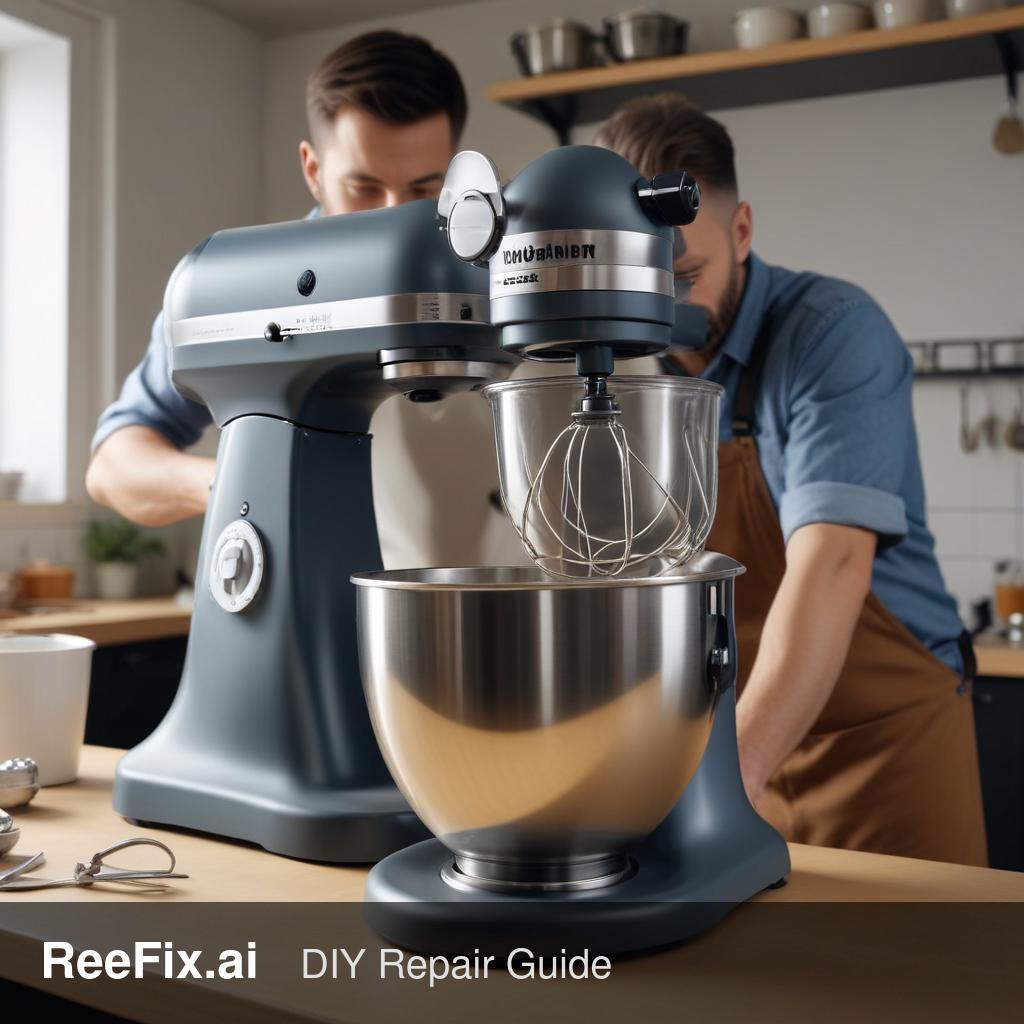
WARNING: This appliance is connected to the mains electricity. It is mandatory to always unplug it before any disassembly. If the physical intervention is complex, it is recommended to rely on a qualified technician for your safety. ReeFix provides this diagnosis EXCLUSIVELY for educational and informational purposes.
IF the whisk attachment (hub) oscillates and you hear a "click" sound
This indicates a mechanical problem in the transmission system.
Quick checks:
- Unplug the mixer. Try to manually move the whisk attachment: is there excessive play?
- With the mixer off, slowly rotate the attachment: do you feel points of resistance or the click?
Key signs/indicators:
- The clicking sound is more noticeable or worsens when the mixer is under load (e.g., kneading a thick dough).
- The oscillation is visible even when empty, not just with the attachment.
Causes and probabilities:
- Wear or damage to the KitchenAid Artisan 5KSM175 Planetary Gear Assembly: This is the most common cause (65-70%). Worn gears, bushings, or internal shafts create play.
- Wear of the KitchenAid Artisan 5KSM175 Worm Gear: Frequent (20-25%), especially with intense use. The worm gear is the first gear after the motor and wears out, causing incorrect meshing and clicking.
- Degraded or insufficient internal grease: Less likely as a primary cause of play, but contributes to wear and noise (5-10%).
It often happens when... The KitchenAid has been used intensely for many years, especially for hard or frequent doughs. The original grease hardens or becomes contaminated, accelerating gear wear. A typical user error is to ignore the problem until it becomes severe, turning minor wear into extensive damage.
IF the bowl does not lock securely
This is a separate but related problem to overall stability.
Quick checks:
- Unplug the mixer. Try inserting and removing the bowl several times. Does it get stuck or lock with difficulty?
- Inspect the base where the bowl locks: are there any debris, bends, or obvious wear on the KitchenAid Artisan 5KSM175 Bowl Locking Plate?
Key signs/indicators:
- The bowl lifts or moves slightly even when "locked," especially during use.
- The locking mechanism (pin/lever) appears loose or does not return completely to position.
Causes and probabilities:
- Worn or bent bowl locking mechanism: Very likely (80%). The pin, spring, or locking lever has worn out or bent.
- Deformation of the KitchenAid Artisan 5KSM175 Bowl Locking Plate: Possible (15%), especially after impacts or abnormal loads.
- Debris accumulation: Rare but possible (5%), prevents proper engagement.
THEREFORE:
The combined symptoms indicate significant internal mechanical wear. Oscillation and clicking are almost always caused by worn gears (Planetary Gear Assembly or Worm Gear). A bowl that does not lock is a problem with the locking mechanism, which can be exacerbated by excessive machine body vibrations.
Technical logic: Excessive play in the planetary gears or worm gear causes hub oscillation. This play prevents the gear teeth from meshing perfectly, generating a "click" sound and further accelerating wear. The resulting vibration and stress can, over time, also affect the stability of the bowl locking mechanism.
Estimated costs:
- Spare parts:
- KitchenAid Artisan 5KSM175 Planetary Gear Assembly or KitchenAid Artisan 5KSM175 Worm Gear: medium-high cost.
- KitchenAid Artisan 5KSM175 Bowl Locking Plate: medium-low cost.
- Food-grade Grease for KitchenAid: low cost.
- Labor (technician): High, given the complexity of disassembling and reassembling the mixer head.
Tools needed (for DIY):
- Screwdriver Set (Phillips and flathead).
- Snap Ring Pliers (for removing some gears).
- Specific food-grade grease for KitchenAid.
- Cleaning cloths.
Output for technician: KitchenAid Artisan 5KSM175 mixer with hub oscillation, audible click, and insecure bowl lock. Suspected wear of the planetary gear assembly/worm gear and/or malfunction of the bowl locking mechanism. In-depth inspection of gears, bushings, shafts, and the bowl locking system is requested.
CONCLUSION:
If the oscillation is minimal and the click is rare, and only the bowl does not lock properly, you can attempt a DIY repair of the bowl locking mechanism. If the oscillation is pronounced and the click is loud and constant, it is strongly recommended to consult a technician for professional diagnosis and repair, or replace the device if the repair cost approaches that of a new appliance.
This diagnostic report is generated using an artificial intelligence system (RAG) based on the aggregation of online data. The moderation by Luca Chia (Electronic Expert) validates its logical coherence and technical plausibility regarding the described symptoms, confirming the correctness of the AI's diagnostic reasoning, without however constituting an absolute guarantee of resolution for individual cases.