
Diagnosis Guide for Loud Noise and Vibrations in LG GBB62PZGFN Refrigerator
Generated by ReeFix AI · Sources: technical and specialist documentation (see Sources section)
Revision of 08/06/2026
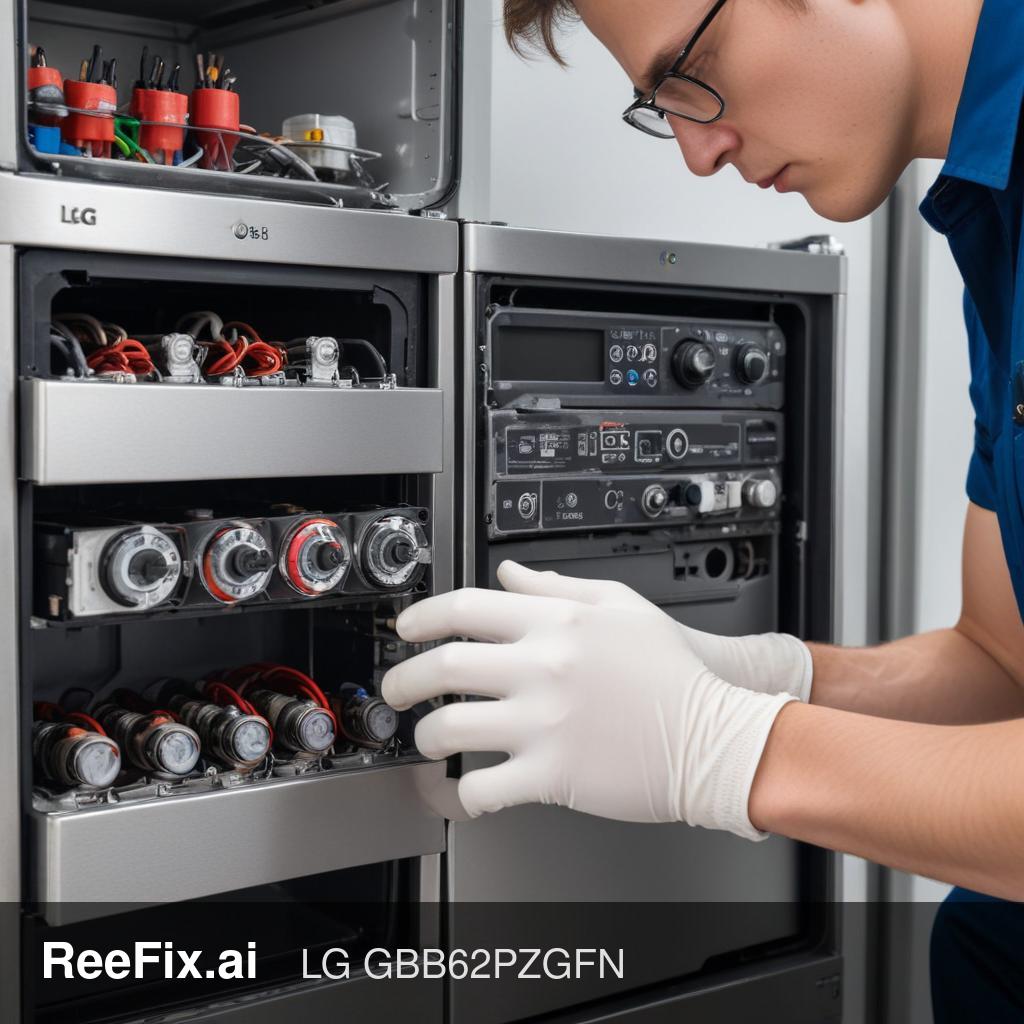
⚠️ WARNING / ELECTRICAL HAZARD. This appliance operates with High Voltage or residual charges. Physical intervention is extremely dangerous and it is strongly recommended to entrust it to a qualified specialized technician to avoid electrocution. This diagnosis is provided EXCLUSIVELY for educational and informational purposes.
BEFORE THE FAILURE
Your LG GBB62PZGFN refrigerator was functioning normally, emitting a slight hum or a barely perceptible whirring sound. The compressor, the "heart" of the system, pushes refrigerant through the circuit. Over time, internal mechanical components or vibration isolation systems can degrade due to wear, temperature variations, and continuous stress.
AT THE TIME OF FAILURE
Now you hear a loud noise and feel significant vibrations coming from the compressor area, at the back of the refrigerator. This is a critical signal.
Causes and Probability:
-
Degraded compressor anti-vibration mounts (Probability: 60-75%)
- Why: The rubber mounts that isolate the compressor from the refrigerator frame have hardened, cracked, or shifted. They can no longer absorb the normal vibrations of the compressor, which are thus transmitted and amplified by the refrigerator's structure.
- Key signs: "Thumping" or "amplified hum" type noise, palpable vibration when touching the back.
- Often happens when: The compressor's rubber mounts harden or crack over time, losing their elasticity.
-
Internal mechanical compressor failure (Probability: 20-30%)
- Why: Internal components such as bearings, pistons, or sliding mechanisms are worn, causing excessive friction or mechanical play.
- Key signs: Deep "knocking", "squealing", or "grinding" noise, which often does not vary much with external pressure on the compressor. Cooling capacity might be compromised.
-
Refrigerant circuit problems (Probability: Low, <10%)
- Why: Lack or excess of refrigerant, presence of non-condensable gases, or "liquid slugs" (liquid refrigerant entering the compressor) can stress the compressor, making it work harder or causing mechanical shocks.
- Key signs: The noise may be accompanied by obvious cooling problems. Requires specific tools for diagnosis.
-
Defective electrical components (Start relay or run capacitor) (Probability: Low, <5%)
- Why: A defective relay can cause noisy start attempts (repeated clicks), while a depleted capacitor can prevent the compressor from reaching optimal speed, causing it to strain and hum.
- Key signs: The noise may be more of a "hum" or "gurgle" at startup or during operation, with the compressor appearing to be under strain.
AFTER THE EVENT
Quick checks (with caution and appliance unplugged):
- Visual inspection of mounts: Unplug the refrigerator from the power. Access the compressor compartment (usually at the back, bottom). Check the condition of the rubber mounts that secure the compressor. Look for cracks, hardening, or if they have come out of their seat.
Output for technician (if you decide to call):
"The LG GBB62PZGFN refrigerator exhibits loud noise and significant vibrations localized in the compressor compartment. The noise is described as an amplified knocking/squealing/humming. Degradation of the compressor's rubber anti-vibration mounts or an internal mechanical compressor failure is suspected. It is advisable to check the condition of the mounts, associated electrical components (relay, capacitor), and, if necessary, the refrigerant circuit using pressure gauges."
Given the electrical risk and the complexity of interventions on the refrigerant circuit, for any cause of the noise/vibration, it is strongly recommended to contact a qualified technician.