
Electrolux EW7H3785SP Dryer: Drum Not Spinning - Diagnosis and Solution
Validated by Luca Chia, Certified Electronic Technician
Revision of 18/06/2026
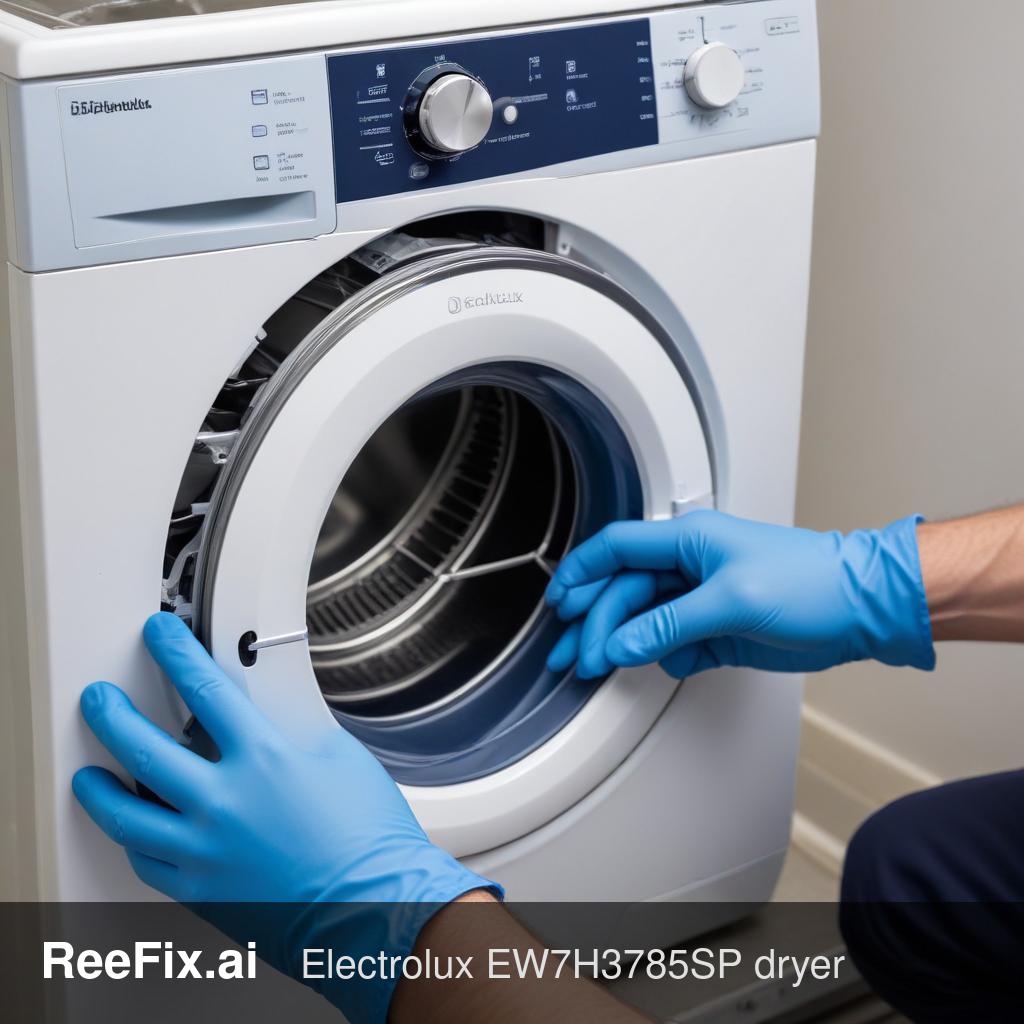
⚠️ WARNING / ELECTRICAL AND MECHANICAL RISK. This dryer operates at 230V. Before any intervention, unplug the appliance or deactivate the main circuit breaker. Be aware of the mechanical risk associated with the tensioner spring snapping and sharp internal metal sheets. Physical intervention is dangerous, and it is strongly recommended to entrust it to a specialized technician. ReeFix provides this diagnosis EXCLUSIVELY for educational and informational purposes.
THE PROBLEM
Your Electrolux EW7H3785SP dryer's drum is not spinning, and you hear an abnormal noise, similar to a dull thud or a rubbing sound. This is a very specific signal indicating a mechanical problem in the transmission system.
Most probable cause: Broken or dislocated drive belt (70-75%) The belt is the main component that transfers rotation from the motor to the drum. If it breaks or comes off, the drum cannot spin.
- Key signs:
- The drum does not spin at all, even if the motor emits a background hum.
- A sudden noise, like a thud or rattling, followed by the sound of the motor spinning idly.
- In some cases, the belt might only be loose or frayed, causing a squealing or continuous rubbing noise.
- The display might show a generic error code (e.g., E50 family) related to a rotation anomaly.
- Why it often happens: The belt is subject to wear and material fatigue over time, due to heat, friction, and mechanical stress. Frequent overloading of the dryer accelerates this process. It often happens after several years of intensive use.
Other less probable causes:
- Blocked or worn idler pulley (15-20%): This pulley maintains the correct tension on the belt. If its bearings are worn or it gets blocked due to lint accumulation, it can cause excessive friction on the belt, leading it to break prematurely, or prevent the drum from spinning correctly.
- Worn rear bearing or support rollers (5-10%): These elements support the weight of the drum and allow it to spin on its axis. If they are worn or blocked, they create excessive mechanical resistance that the belt cannot overcome.
- Faulty motor or defective start capacitor (less than 5%): The motor might not have enough power to spin the drum, even if the belt is intact. A depleted start capacitor is a common cause, as it prevents the motor from reaching the necessary starting torque.
HOW TO FIX
Given the electrical risk and the need to disassemble a large part of the chassis, the intervention must be performed by a qualified technician. DIY repair is strongly discouraged.
Quick checks (that a technician will perform):
- Visual inspection of the belt: After unplugging the appliance and removing the top and rear/side panels, the technician will look for a broken, frayed, or fallen belt at the bottom.
- Idler pulley check: They will verify that the wheel spins freely on its axis and that the tension spring is intact.
- Drum support examination: They will check the wear status of the rear shaft and the free rotation of the front rollers.
- Motor and capacitor test: If the belt is intact, the technician will use a multimeter to test the capacitor's capacity and check the motor windings.
Estimated costs (for technical intervention):
| Intervention | Part Cost (€) | Labor Cost (€) | Estimated Total Cost (€) |
|---|---|---|---|
| Belt replacement | 15-40 | 80-150 | 95-190 |
| Idler pulley and/or supports replacement | 20-60 (per comp.) | 80-150 | 100-210 |
| Start capacitor replacement | 10-30 | 80-150 | 90-180 |
| Motor replacement | 100-250 | 80-150 | 180-400 |
Tools needed (for the technician):
- Set of screwdrivers and socket wrenches (Torx, hexagonal)
- Long-nose pliers
- Multimeter (to test the capacitor and circuit continuity)
Most common spare parts (for Electrolux EW7H3785SP):
- Drive belt for Electrolux EW7H3785SP dryer
- Replacement idler pulley for Electrolux EW7H3785SP
- Drum supports and rollers for Electrolux EW7H3785SP
- Motor start capacitor for Electrolux EW7H3785SP
Safety notes: Always unplug the dryer from the electrical outlet before any inspection. Start capacitors can retain a dangerous electrical charge even after being disconnected from the mains.
FINAL VERIFICATION
The technician will proceed with sequential diagnosis. The absolute priority will be the inspection of the belt, given the problem description.
Output for technician: The Electrolux EW7H3785SP dryer shows no drum rotation with abnormal mechanical noise (thud/rubbing). A broken or dislocated drive belt is suspected. Verify belt integrity, idler pulley functionality, and the condition of the drum supports. Subsequently, check the start capacitor and motor windings.
Operational decision: If the drive belt is broken or dislocated (70-75% probability), a technician can replace it at a total cost of 95-190€, making the repair absolutely cost-effective. If the problem is more complex (burnt motor or combined structural damage), and the appliance is more than 5-7 years old, it might be necessary to consider replacing the appliance.
Why is my Electrolux EW7H3785SP dryer drum not spinning?
Most likely a broken or dislocated drive belt. You'll hear the motor hum but the drum won't turn, often with a thud or rubbing sound. Call a technician.
What are common signs of a broken dryer belt?
The drum won't spin, but the motor may hum. You might hear a thud, rattling, or rubbing noise. Some models show a rotation error code (e.g., E50).
Should I try to fix a dryer drum that won't spin myself?
No, due to high voltage (230V) and mechanical risks (springs, sharp metal). It's strongly recommended to entrust diagnosis and repair to a specialized technician.
This diagnostic report is generated using an artificial intelligence system (RAG) based on the aggregation of online data. The moderation by Luca Chia (Electronic Expert) validates its logical coherence and technical plausibility regarding the described symptoms, confirming the correctness of the AI's diagnostic reasoning, without however constituting an absolute guarantee of resolution for individual cases.