
Front-Load Washing Machine with Moldy Smell: Diagnosis Guide
Generated by ReeFix AI · Sources: technical and specialist documentation (see Sources section)
Revision of 05/05/2026
⚠️ WARNING / SERIOUS RISK. This appliance operates with intrinsically dangerous components (High Voltage, Temperatures, or Gas). Improvised DIY repairs on critical devices can be fatal or prohibited by law. Physical intervention requires qualified specialized technicians to issue compliant safety certificates. ReeFix provides this diagnosis EXCLUSIVELY for educational and informational purposes.
IMMEDIATE DIAGNOSIS
A front-load washing machine emitting a moldy smell, leaving black stains on light-colored clothes, and having a "clogged" door seal almost certainly indicates microbial proliferation.
- Mold and Residue in the Door Seal:
70%
- Why: Accumulation of moisture, detergent, and organic material in the seal's folds creates an ideal environment for mold and bacteria. Black stains on clothes are transferred spores.
- Poor Ventilation and Drying:
15%
- Why: Leaving the door closed after washing retains moisture, promoting microbial growth even after superficial cleaning.
- Excessive or Incorrect Detergent Use:
10%
- Why: Too much detergent, especially with high-efficiency machines that use less water, can leave sticky residues that feed mold and clog the seal.
- Minor or Contributing Causes:
5%- Clogged drain pump filter, too frequent low-temperature washes, limescale deposits providing a rough surface for mold adhesion.
QUICK TEST
To distinguish the causes and assess the extent of the problem:
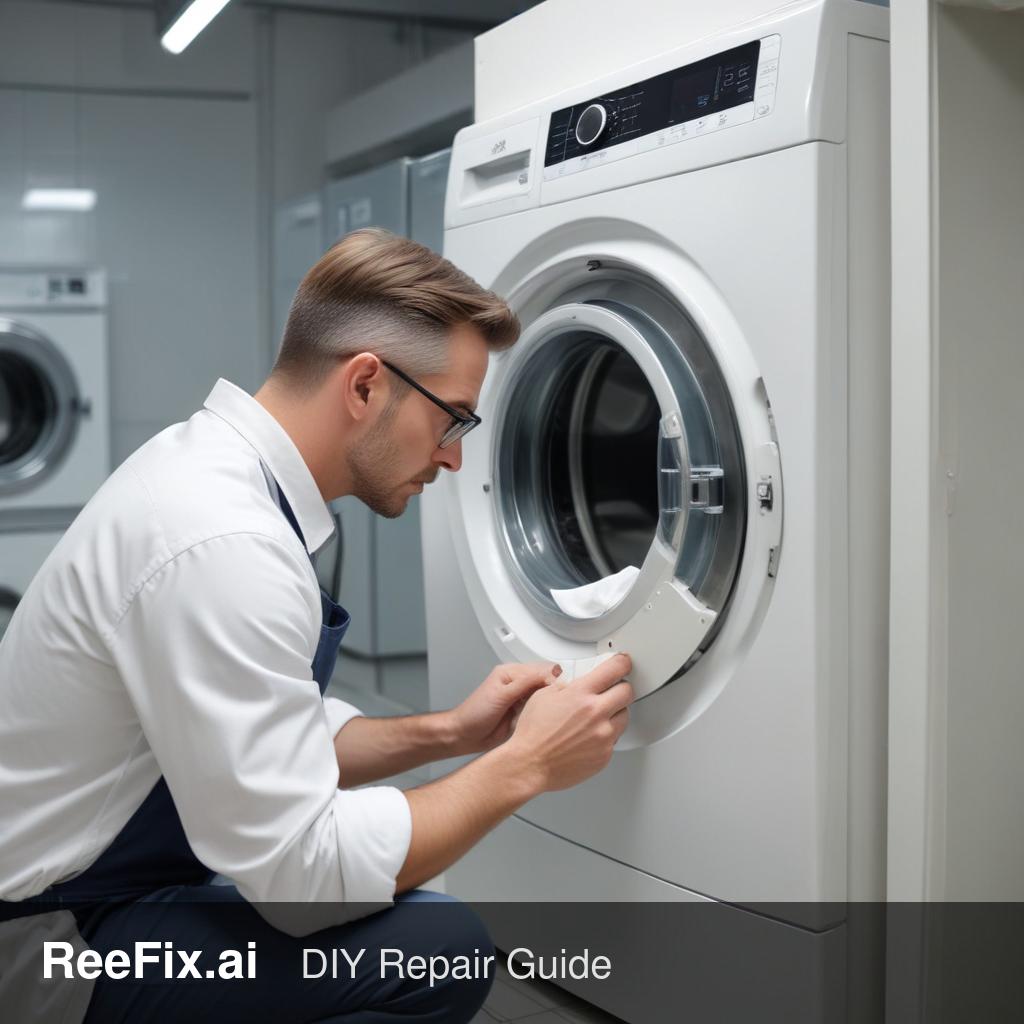
- Thorough Visual Inspection: Open the door and carefully inspect the entire circumference of the rubber seal, especially the inner folds and the lower section where water tends to stagnate. Look for black or dark mold, solidified detergent residues, or lint. Also check for cracks or hardening of the rubber.
- Check Drainage Channels: Inside the seal, there are small holes or drainage channels. Make sure they are not obstructed by dirt or residue. You can use a flashlight and a small non-pointed object to check.
- Check Detergent Dispenser: Pull out the detergent drawer and inspect it for mold or detergent buildup. If it's dirty, it can contribute to the overall smell.
- Analyze Washing Habits: Ask yourself: Is the door left open after each wash? Do you use specific high-efficiency (HE) detergent? Do you occasionally run hot wash cycles?
MOST PROBABLE DIAGNOSIS
The most probable cause is an infestation of mold and organic residues in the door seal, exacerbated by a persistently humid environment. The folds of the seal are an ideal receptacle for water, dirt, and detergent, creating a fertile ground for fungal growth which then transfers to fabrics.
COMMON MISTAKES
- Ignoring the Problem: Mold does not disappear on its own and worsens, compromising the integrity of the seal and increasing the risk of allergies or respiratory problems.
- Superficial Cleaning: Cleaning only the visible part of the seal without reaching the inner folds or using specific products does not solve the root problem; the mold will quickly regrow.
- Not Leaving the Door Open: Closing the door immediately after washing traps moisture, nullifying any cleaning or prevention efforts.
- Excess Detergent: Using more detergent than necessary does not clean better, but leaves more residues that feed mold and clog components.
REAL CASES
- Case 1: Mild Odor, Rare Stains: A user complains of a slight odor and some stains. Inspection reveals superficial mold in the lower folds of the seal. A deep cleaning with a Mold and Limescale Cleaner for Washing Machines and adopting the habit of leaving the door open after washes solve the problem.
- Case 2: Deep Mold, Damaged Seal: After years of ignored problems, a customer presents a seal with deeply rooted mold, cracks, and hardened rubber. In this case, washing machine door seal replacement is the only lasting solution, often requiring tools like a Screwdriver Set and Spring Clamp Pliers for installation.
- Case 3: Recurring Problem Despite Cleaning: A user regularly cleans the seal, but the odor and stains return. It turns out they use an excessive amount of detergent and never leave the door open. Correcting washing habits and a deep cleaning cycle resolve the recurrence.
WHEN IT'S NOT THIS
If the smell is not moldy (e.g., burning smell, sewage smell), if there are no black stains on clothes or the seal, or if the problem is exclusively related to water drainage without unpleasant odors, the cause is not mold in the seal. In these cases, problems with the drain pump, filter, or domestic plumbing system should be investigated.
This diagnostic report is generated using an artificial intelligence system (RAG) based on the aggregation of online data. The moderation by Luca Chia (Electronic Expert) validates its logical coherence and technical plausibility regarding the described symptoms, confirming the correctness of the AI's diagnostic reasoning, without however constituting an absolute guarantee of resolution for individual cases.