The listed partner professionals are independent entities. ReeFix acts exclusively as a referral platform and declines any liability for the services they provide.
🚀 Launched April 1, 2026
Chia Luca | P.IVA IT01433480991 | Sede Legale: Via Filippo Casoni 4a r, Genova (GE) Italia | Reefix™ è un marchio depositato di Luca Chia.
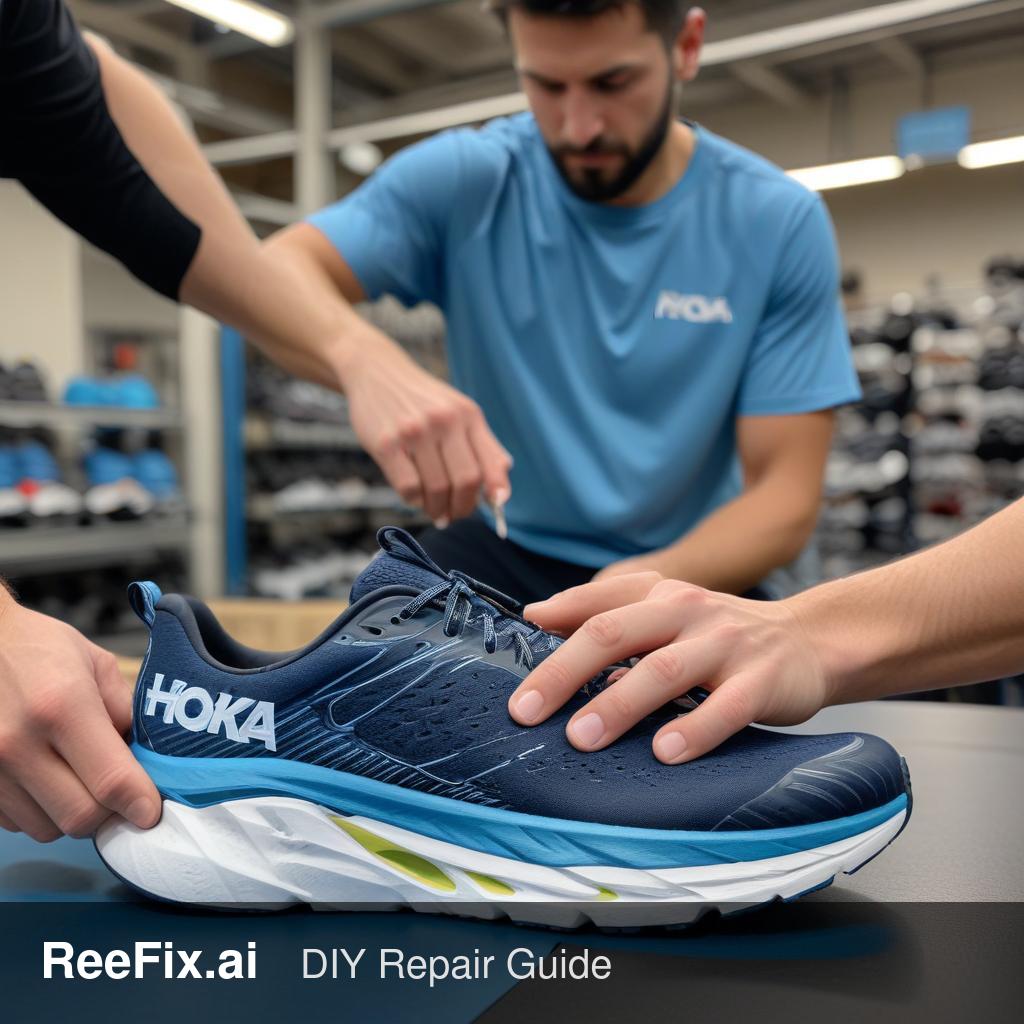
Hoka Clifton 9 Sole Delamination: Diagnosis and Repair Guide
📋 AI-generated diagnosis based on technical documentation Generated by ReeFix AI · Sources: technical and specialist documentation (see Sources section) Revision of 25/05/2026
ⓘThe spare parts links below are Amazon or eBay affiliate links. If you purchase through these links, we earn a small commission at no extra cost to you.
⚠️ SAFETY AND ERGONOMICS WARNING DIY repair of the sole or midsole (made of EVA/PeBax foam) can alter the original support geometry, drop, and cushioning properties of the shoe. Using footwear with altered geometries or non-elastic glues increases the risk of tendon inflammation, plantar fasciitis, or joint trauma during sports activities.Warranty: Any attempt at home gluing invalidates the official manufacturer's warranty (Hoka), eliminating the possibility of requesting a free replacement for a lack of conformity within legal terms.Use of Solvents: The application of specific adhesives (such as mastics or polyurethane glues) requires use in well-ventilated areas due to the emission of toxic and flammable vapors.Disclaimer: ReeFix provides this information for illustrative purposes only. To maintain the biomechanical safety of the running shoe, it is recommended to entrust the work to a professional shoemaker or contact the brand's customer support.
Quick Diagnosis: Hoka Clifton 9 – Sole Delamination and Cracks
Sole delamination, glue separation, and cracks in the midsole of Hoka Clifton 9 after only six months of use indicate premature structural failure. This is not considered normal wear and tear.
Probable Causes:
Manufacturing Defect (68%): The most probable cause is a problem in the production process. This includes inadequate adhesive application, chemical incompatibility between materials, or a midsole (typically EVA foam) of substandard quality, which loses elasticity and cracks prematurely. This often happens when adhesive curing is not optimal.
Environmental Stress/Extreme Use (27%): Less likely for such a short period, but prolonged exposure to extreme temperatures, high humidity, or use on particularly aggressive terrain can accelerate the degradation of materials and adhesives.
Key Signs:
Obvious detachment between sole layers (delamination).
Visible and tactile cracks in the midsole.
Quick Checks:
Assess the extent and depth of the cracks in the midsole: are they superficial or do they go through the material?
Check separated surfaces for glue residue: a "clean" separation suggests poor initial adhesion.
According to community experiences, the cost of sole re-gluing at a cobbler is around €30.
Did this diagnosis help you?
This report has been made available for you 🎁
You are reading a premium analysis that we chose to make accessible to everyone. If you have another problem to identify, create your account: the first technical verification is on us!
⭐ Verified ReeFix Partners
This diagnostic report is generated using an artificial intelligence system (RAG) based on the aggregation of online data. The moderation by Luca Chia (Electronic Expert) validates its logical coherence and technical plausibility regarding the described symptoms, confirming the correctness of the AI's diagnostic reasoning, without however constituting an absolute guarantee of resolution for individual cases.