
Miele CM5310 Milk Frother Not Frothing Milk: Diagnosis Guide
Validated by Luca Chia, Certified Electronic Technician
Revision of 15/06/2026
⚠️ SAFETY WARNING. This appliance is connected to the mains electricity and handles high-temperature steam. It is mandatory to always unplug it from the socket before any disassembly. Pay utmost attention to the risk of burns when handling the components of the brewing unit. If the physical intervention is complex, it is recommended to rely on a qualified technician for your safety. ReeFix provides this diagnosis EXCLUSIVELY for educational and informational purposes.
OBSERVED SYMPTOMS
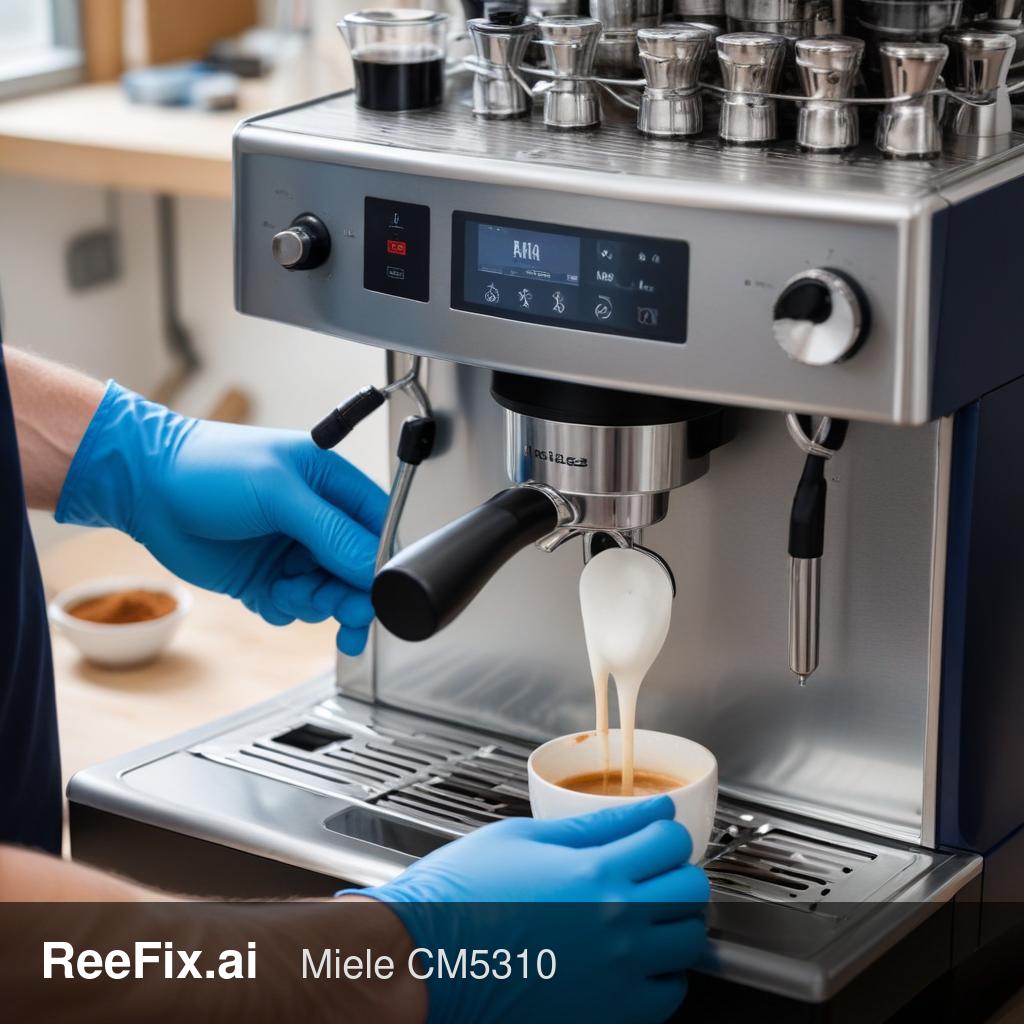
The Miele CM5310 milk frother does not produce milk foam, or the dispensed milk is watery, lukewarm, or completely absent. Other machine functions (espresso dispensing, hot water) appear to operate normally. This indicates a problem confined exclusively to the milk suction and frothing system.
WHAT TO EXCLUDE
Considering the problem is isolated to the milk function only, it is unlikely that the main cause is:
- Water pump or main thermoblock: The Miele CM5310 uses the Venturi principle (pressurized steam draws in milk). If the water pump or main heating element were faulty, there would be generalized problems, such as slow or absent coffee dispensing and a total lack of hot water, not just a frothing defect.
- Electronic Control Unit (ECU): While not impossible (5% probability), an electronic fault is much less frequent than obstructions or mechanical wear in a delicate hydraulic system like that of the milk frother. The problem almost always points to a physical obstruction.
FINAL CAUSE
The Miele CM5310's difficulty in frothing milk almost always focuses on a few critical points of the dispensing system. The probability is heavily skewed towards problems with cleaning and maintenance of the conduits.
- Obstruction in the milk frother assembly or milk tube (60-75%)
- Why it happens: Milk residues (proteins and fats) and limescale accumulate in the narrow channels of the central milk frother and the silicone suction tube. This blocks the flow of milk, steam, or air, preventing the correct mixing (Venturi effect) needed to create foam. It often happens when automatic rinsing is insufficient or manual cleaning is neglected.
- Key signs: Absence of milk, watery milk, steam coming out in bursts, reduced flow. Presence of dirt or encrustations when disassembling the components of the brewing unit.
- Quick checks (DIY): 1. Unplug the device from the power and let it cool down. 2. Completely disassemble the milk frother assembly (by pulling it off the central dispenser) according to the Miele manual. 3. Clean every single component (rubber nozzles, fittings) with hot water and a set of cleaning brushes for coffee machines. 4. Check that the milk tube is not bent, internally obstructed, or micro-perforated. 5. Perform a specific descaling cycle with a suitable descaling solution.
- Costs: Low (0-30€ for cleaning brushes and descaler).
- Prevention tips: Always perform the milk line rinse required by the machine and disassemble the milk frother for manual washing at least once a week.
- Worn or damaged Gaskets (O-rings) (15-20%)
- Why it happens: The small rubber gaskets on the frother's fittings harden, crack, or flatten with heat and wear. A minimal air leak at these points interrupts the vacuum needed to draw in milk, or introduces too much air, destroying the foam's consistency.
- Key signs: Abnormal hissing or audible air leaks during dispensing, milk struggling to rise from the tube, foam with bubbles that are too large and quickly disappear.
- Quick checks (DIY): Inspect the O-rings on the frother assembly's connection pins. If they appear dry, deformed, or cut, they should be replaced.
- Costs: Very low (5-20€ to purchase a compatible Miele CM5310 O-ring Set).
- Defective Steam Valve (5-10%)
- Why it happens: The internal valve (often a solenoid valve or ceramic valve) that diverts steam flow from the thermoblock to the frother can become partially blocked due to limescale buildup or suffer a mechanical failure. Without constant and powerful steam pressure, the Venturi system does not activate.
- Key signs: Weak or completely absent steam during the milk function, puffs of steam escaping inside the machine or into the drip tray instead of from the dispenser.
- Output for technician: The technician will need to open the casing, check the integrity of the hydraulic circuit, and test the continuity and mechanical operation of the diverter valve.
- Costs: Medium (30-70€ for the replacement Miele CM5310 Steam Valve, plus labor).
Operational Decision: In the vast majority of cases, a thorough manual cleaning (cause 1) or replacement of the gaskets (cause 2) will resolve the problem independently. If these operations do not yield results, it is likely that the component's plastic is deformed, and the entire Miele CM5310 Milk Frother Assembly needs to be replaced (cost 40-80€, simple operation). If, however, a clear lack of steam pressure is observed (cause 3), the fault is internal. In this case, given the need to open the machine and the cost of labor (60-120€), it is advisable to contact a service center. If the total estimate for an internal repair exceeds 150-200€, it might be worth considering replacing the device, especially if the machine has many years of service.
Why is my Miele CM5310 milk frother not frothing milk?
The issue is likely isolated to the milk frothing system, often due to blockages or wear. Main pump/thermoblock are usually functional if coffee works.
What are common reasons a coffee machine's milk frother fails?
Typical causes include obstructions in milk lines, worn seals, or issues with the steam valve specific to the frothing mechanism.
When should I seek professional help for a frother problem?
If the diagnosis involves complex disassembly or you're unsure about safety, it's recommended to contact a qualified technician for repair.
This diagnostic report is generated using an artificial intelligence system (RAG) based on the aggregation of online data. The moderation by Luca Chia (Electronic Expert) validates its logical coherence and technical plausibility regarding the described symptoms, confirming the correctness of the AI's diagnostic reasoning, without however constituting an absolute guarantee of resolution for individual cases.