
Miele DA 6698 W Blower Motor Not Working: Diagnosis Guide
Validated by Luca Chia, Certified Electronic Technician
Revision of 09/06/2026
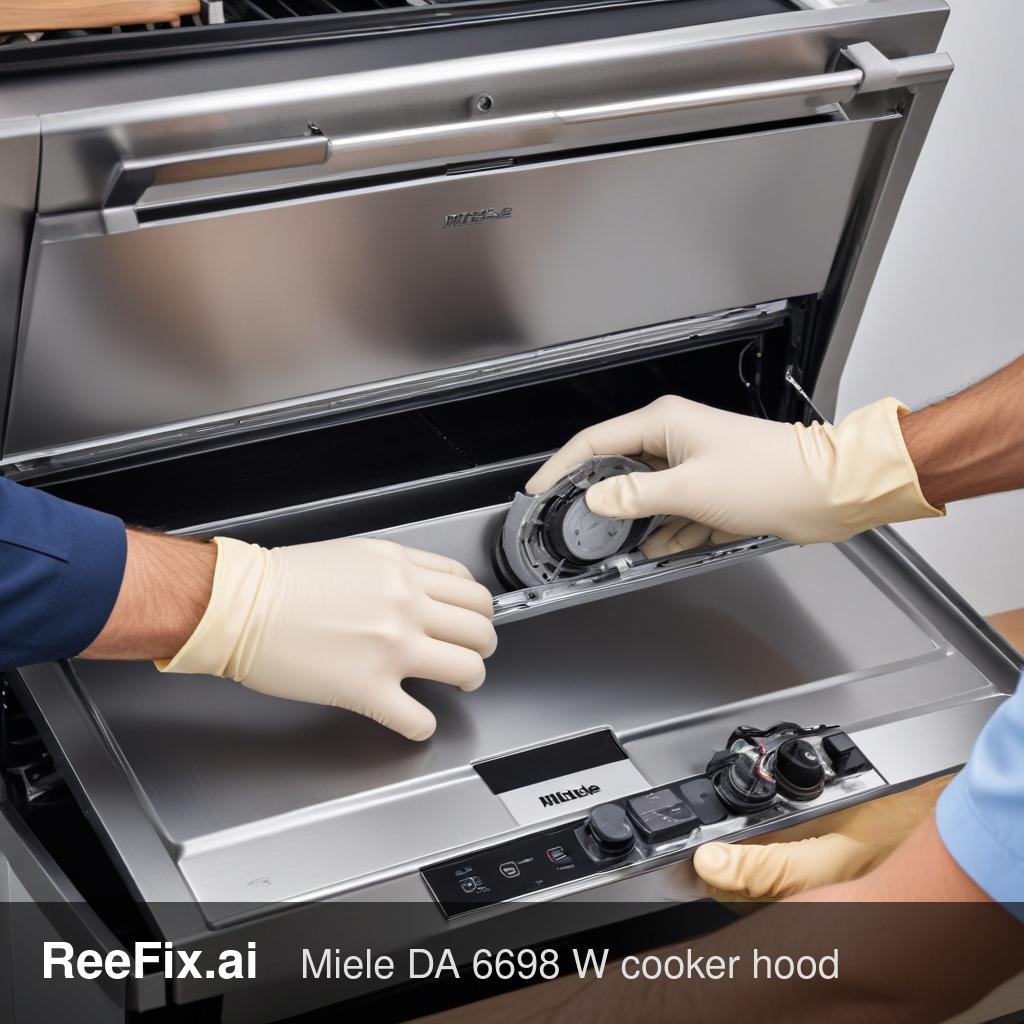
⚠️ SAFETY WARNING / ELECTRICAL HAZARD. This appliance operates with High Voltage or residual charges. Physical intervention is extremely dangerous and it is strongly recommended to entrust it to a qualified specialized technician to avoid electric shocks. ReeFix provides this diagnosis EXCLUSIVELY for educational and informational purposes.
OBSERVED SYMPTOMS
The Miele DA 6698 W hood presents a critical fault: the blower motor is not working. This is accompanied by a distinctive "error noise". This noise can vary:
- Grinding or squealing: Often indicates motor bearing problems.
- Humming or buzzing: Typical of a motor attempting to start but being blocked (mechanically or electrically) or a faulty start capacitor.
- Rattling or scraping: Suggests a physical obstruction or damage to the fan blades. The presence of noise is a crucial indicator for diagnosis.
WHAT TO RULE OUT
- Total lack of power: If the hood lights or display work, the appliance is receiving power. The problem is localized in the fan circuit.
- Surface obstruction: If the motor does not attempt to spin at all or emits a blocked hum, it is unlikely to be just a clogged filter or small, easily removable debris.
- Simply "off": Ensure the hood has not been accidentally turned off or that a delay function is not active.
FINAL CAUSE
1. Blower Motor Failure (Bearings or Windings) - Probability: 55-65%
- Key signals: Loud hum but no fan rotation (blocked motor), grinding or squealing noise (worn bearings), possible burning smell. Total lack of fan movement.
- Why: Wear of motor bearings is common and prevents rotation. Alternatively, internal windings can be damaged by overheating or defects, interrupting the magnetic field necessary for starting.
- Often happens when: The hood has many years of use, the cooking environment is particularly greasy or humid, or the exhaust duct has been partially obstructed for a long time, overloading the motor.
- Estimated repair cost: Replacement Miele DA 6698 W Blower Motor 100-250€, Labor 80-150€. Total: 180-400€.
2. Control Board Malfunction - Probability: 25-30%
- Key signals: The motor does not receive power, even if other functions (e.g., lights) might work correctly. Specific error codes might appear on the display. Sometimes, intermittent operation before total failure.
- Why: The board manages power delivery and control signals to the motor. A defective component (e.g., relay, capacitor, microcontroller) can prevent it from starting or operating.
- Counter-examples: If the motor hums or attempts to spin, it is less likely that the board is not supplying any current.
- Estimated repair cost: Replacement Miele DA 6698 W Control Board 150-300€, Labor 80-150€. Total: 230-450€.
3. Severe Obstruction or Damage to Fan Assembly - Probability: 10-15%
- Key signals: Rattling or scraping noise, fan blocked by debris or excessive grease buildup, bent or broken blades. The motor might attempt to start but fail to spin freely.
- Why: Foreign objects, massive grease buildup, or physical damage to the Miele DA 6698 W Fan Blades can prevent rotation, stressing the motor until it locks.
- Quick checks (for the user): Check the grilles and fan blades (if accessible without disassembly) for grease buildup or debris. DO NOT attempt to remove obstructions if you cannot safely disconnect the appliance from the mains.
- Estimated repair cost: Replacement Miele DA 6698 W Fan Blades 30-80€, Labor 60-100€. Total: 90-180€.
Tools needed (for the technician): A Multimeter, a Screwdriver Set, socket wrenches, pliers, and, if necessary, a capacitor tester.
Output for technician (synthetic handoff): Miele DA 6698 W hood with inactive blower motor and abnormal noise. Probable diagnosis: mechanical/electrical motor failure (bearings/windings) or control board malfunction. Requires winding continuity check, capacitor test (if present), fan blade/duct inspection for obstructions, and verification of power/signals from the board to the motor.
If the motor hums without spinning, or you hear scraping/grinding noises, contact a technician. If you hear no noise but the lights work, the cause could be the control board or an electrical interruption to the motor; here too, contact a technician. If the hood is old and the estimated repair cost approaches that of a new appliance, consider replacement.