
Wolf Dual Fuel Range DF304: convection fan not working
Generated by ReeFix AI · Sources: technical and specialist documentation (see Sources section)
Revision of 20/06/2026
WARNING: SERIOUS RISK. This appliance operates with extremely dangerous components (high voltage at 240V and gas). Improvised DIY repair of critical devices can be fatal and is prohibited by law. Physical intervention requires qualified and specialized technicians to issue compliant safety certificates. Furthermore, removing the door to access the internal cavity poses a serious mechanical crushing risk due to high-tension spring hinges. ReeFix provides this diagnosis EXCLUSIVELY for educational and informational purposes.
TECHNICAL ANALYSIS
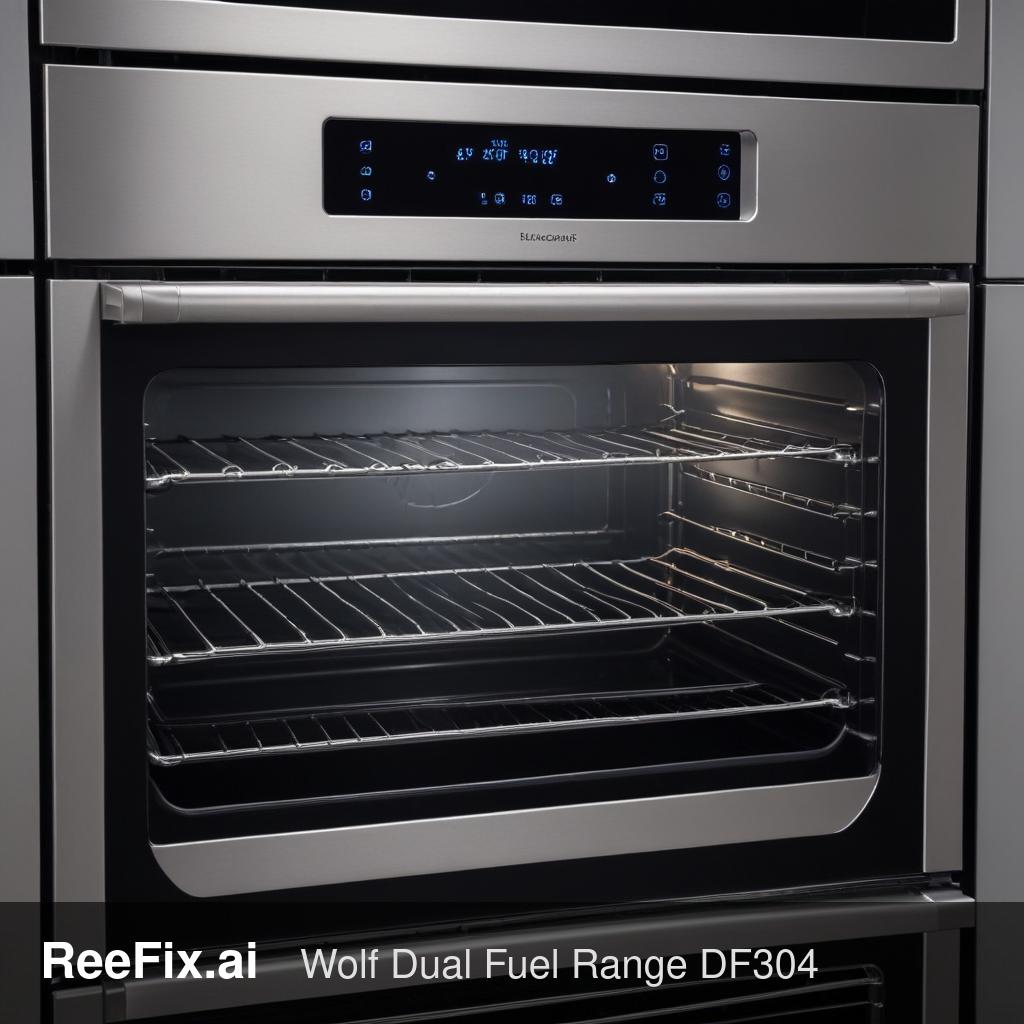
Your Wolf Dual Fuel Range DF304 oven, showing a convection fan anomaly and not heating, indicates a problem in the hot air circulation system, essential for even cooking. If the internal fan in the oven cavity does not work, the generated heat is not distributed, and the oven does not reach or maintain temperature. The electronic control system (ERC), detecting the thermal anomaly, may block heating for safety.
Causes and Probabilities:
- Convection Fan Motor Failure (40-45%)
- Why: The motor located behind the internal rear panel is jammed, worn, or has burnt windings. Without the fan's rotation, hot air does not circulate, preventing the oven from heating correctly in convection mode.
- Key Signals: The fan does not spin at all or emits unusual noises (electrical hums, metallic squeals) when convection mode is active. The oven does not reach temperature or takes excessive time.
- Estimated Cost: Purchasing the convection fan motor for the Wolf DF304 costs approximately €150-300. Labor €100-200.
- Verification (technician): The technician will measure the continuity and resistance of the motor windings and physically check for obstructions or damage to the motor shaft.
- Defective Convection Heating Element (25-30%)
- Why: This circular heating element works in tandem with the fan to generate hot air. If the internal filament is broken, the fan may spin, but the circulating air remains cold.
- Key Signals: The convection fan spins normally, but the oven does not produce heat in convection mode. No red glow visible from the heating element behind the baffle.
- Estimated Cost: The replacement part for the Wolf DF304 convection heating element is around €100-250. Labor €100-200.
- Verification (technician): The technician will use a multimeter to measure the electrical resistance at the heating element terminals to detect an open circuit.
- Blown Thermal Fuse (10-15%)
- Why: This is a safety device (thermal limit) that cuts off power in case of excessive overheating, often caused by a faulty fan motor that fails to dissipate heat.
- Key Signals: Total loss of power to the fan and/or heating elements. The oven might not heat in any mode.
- Estimated Cost: Wolf DF304 Thermal Fuse replacement €20-50. Labor €100-200 (access requires panel disassembly).
- Verification (technician): Check the continuity of the thermal fuse with the appliance unplugged.
- Main Control Board (ERC) Failure (5-10%)
- Why: The electronic board manages the relays that send current to the fan and heating elements. A burnt relay on the board will prevent component activation.
- Key Signals: The display works but components do not activate, or visible signs of burns are noted on the board's relays.
- Estimated Cost: Replacing the control board for the Wolf DF304 costs between €300-600+. Labor €100-200.
- Verification (technician): Visual inspection for relay damage and checking output voltages to the convection circuit.
Experience Tip: Often, a convection fan motor that starts making noise due to bearing wear is a prelude to total failure. If ignored, the motor's blockage causes a local heat spike that triggers (and burns out) the safety thermal fuse.
SECONDARY FACTORS
- Loose/Burnt Wiring or Connections: Defective connections or heat-damaged wires near the heating element can interrupt power to the fan motor.
- Mechanical Obstructions: Accumulations of carbonized grease or food debris can physically block the fan blades behind the baffle panel.
- Defective Temperature Probe (RTD): Although the main symptom is related to the fan, a miscalibrated probe could prevent the board from correctly activating heating cycles.
WHAT TO DO
1. Contact a technician (Most probable and mandatory choice):
- Why: Diagnosing the Wolf DF304 requires specific expertise, oven extraction (extremely heavy), and access to internal parts under 240V live voltage. DIY attempts on appliances of this caliber are dangerous and risk damaging expensive components.
- What to tell them: "My Wolf DF304 oven does not heat in convection mode, and the internal fan does not spin (or makes an abnormal noise). I suspect a failure of the fan motor, the circular heating element, or the thermal fuse activation."
- Estimated Cost: Repair, including original spare parts and specialized labor, can range from €120 (for a thermal fuse) to approximately €800 (for control board or motor replacement).
2. Repair yourself (Not recommended and Dangerous):
- Only if: You are a qualified technician. The only safe operation for the user is to visually inspect the inside of the cavity (with the oven cold and unplugged) to check for aluminum foil or baking sheets blocking airflow in front of the fan panel.
3. Replace the device (Rarely recommended for this brand):
- Why repair is worthwhile: Wolf Dual Fuel ovens are ultra-premium appliances, whose new value easily exceeds €6,000-8,000. Therefore, even in the worst-case scenario (replacement of board and motor for a total of €800), the repair represents only 10% of the appliance's value and is almost always the most logical and economically advantageous option.
- When to replace: Consider replacement only if the appliance is decades old, shows through-rust in the internal cavity, or has suffered irreparable structural damage.
Clear operational decision: If the fan does not spin or makes noise, the most probable cause is the fan motor or a broken convection heating element. Immediately contact an authorized Wolf/Sub-Zero service center to restore your oven's functionality.
Why is my Wolf Dual Fuel Range DF304 convection fan not working?
The most common cause is a faulty convection fan motor. The electronic control system (ERC) might also block heating for safety.
What are the signs of a failed oven convection fan?
The fan won't spin, or you'll hear unusual noises like humming or squealing. The oven may not heat evenly or reach temperature.
Can I fix a broken oven convection fan myself?
No. Due to high voltage (240V) and gas, DIY repair is dangerous and illegal. Always call a qualified technician for safety and compliance.
This diagnostic report is generated using an artificial intelligence system (RAG) based on the aggregation of online data. The moderation by Luca Chia (Electronic Expert) validates its logical coherence and technical plausibility regarding the described symptoms, confirming the correctness of the AI's diagnostic reasoning, without however constituting an absolute guarantee of resolution for individual cases.