
Diagnosis and Repair of LIDAR Error in Neato D10 Robot Vacuum Cleaner
Validated by Luca Chia, Certified Electronic Technician
Revision of 17/06/2026
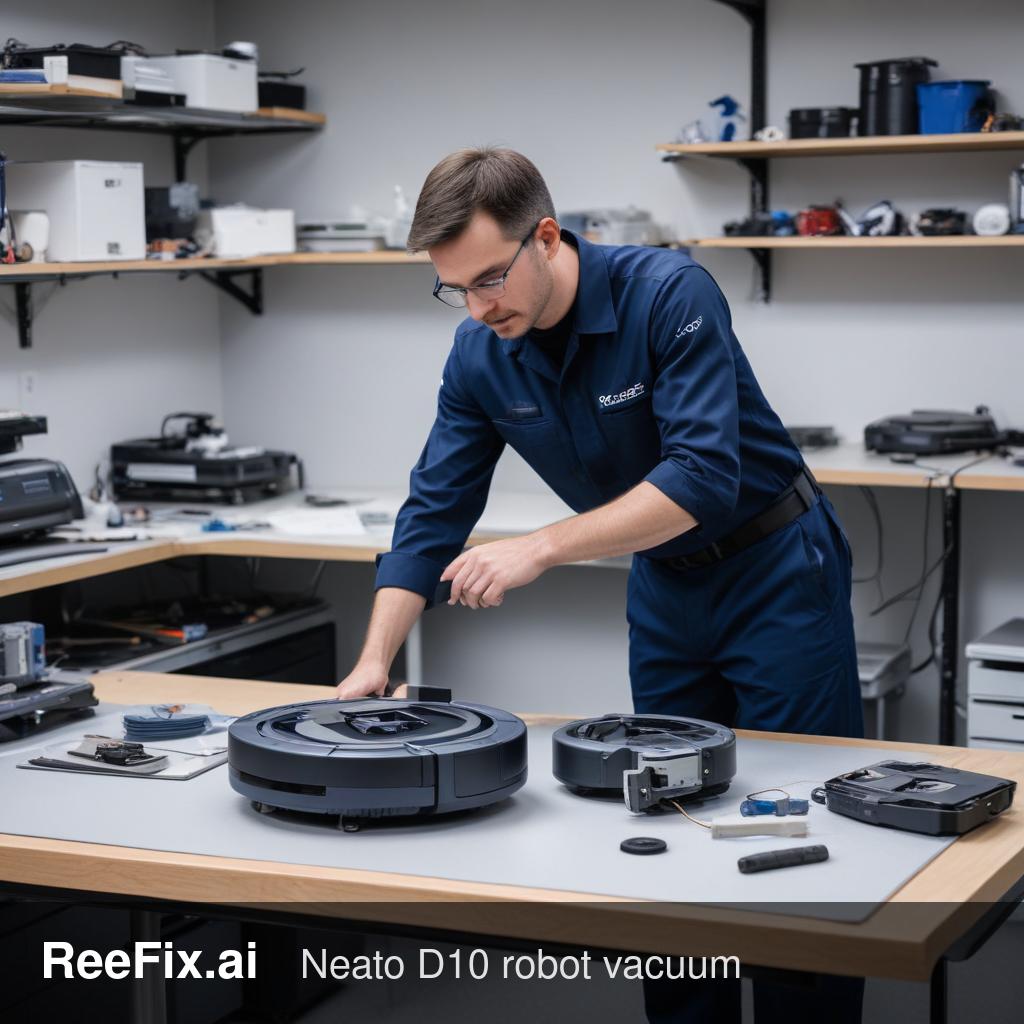
WARNING: This device is powered by a high-capacity lithium-ion battery. During disassembly, accidental perforation or bending of the cells can cause short circuits, flames, or fires. The intervention requires precision, and if you are not familiar with electronics, the assistance of a specialized technician is recommended. ReeFix provides this diagnosis EXCLUSIVELY for educational and informational purposes.
IF the Neato D10 LIDAR does not spin at all and makes no noise
THEN: The cause (approximately 30% probability) is a significant electrical fault preventing the LIDAR motor from receiving power, or a total mechanical blockage (e.g., a broken drive belt twisted around the motor shaft).
Key signals/indicators:
- No movement of the upper LIDAR turret.
- Absence of any noise (humming, squeaking) coming from the turret area.
- Navigation error notifications or "LIDAR error" visible exclusively in the MyNeato app or reported via voice alert/red LED on the robot.
Quick checks (by technician):
- External visual inspection: Quickly check for any grossly stuck objects around the LIDAR turret. It is rare for an external obstruction to cause total silence without first generating effort.
- Connection continuity check: After removing the battery and opening the robot (technician operation), check the continuity of the wiring connecting the LIDAR module to the motherboard. A broken cable completely blocks the motor.
- Motor voltage measurement: A technician can measure the voltage at the LIDAR motor terminals. The absence of voltage indicates an upstream problem (motor driver on the motherboard).
- Motor resistance: Measure the resistance of the motor windings. An open circuit or a short circuit indicates that the motor itself is burned out.
Costs:
- DIY repair (belt/motor replacement): 5-20 euros for spare parts, but requires disassembly of the upper shell.
- Entire module replacement: Purchasing a replacement LIDAR module for Neato D10 costs between 50 and 120 euros.
- Technician labor: 60-120 euros, depending on the time taken.
- Estimated total cost (if serviced): 110-240 euros.
Safety notes:
- Any internal intervention requires turning off the robot and physically removing the battery from its compartment before unscrewing the shell.
IF the Neato D10 LIDAR tries to spin, makes strange noises (scratching, squeaking) or spins intermittently
THEN: The highest probability (approximately 70%) is a mechanical problem related to the transmission: the small rubber belt (O-ring) that spins the LIDAR has loosened, worn out, or broken, or there is an accumulation of debris in the bearings.
Key signals/indicators:
- The LIDAR turret moves in jerks, spins too slowly, or stops after a few seconds.
- Scratching noises, squeaks, or the hum of a motor spinning idly (typical symptom of a slipping belt) are heard.
- The robot leaves the base, stops, the turret tries to spin, and then the robot goes into a navigation error via the app.
Quick checks (DIY / by technician):
- External inspection and cleaning: Turn off the robot. With a soft brush or a can of compressed air, carefully clean the gap around the LIDAR turret, looking for hairs or dust that might hinder rotation.
- Manual rotation test: With the robot off, gently spin the turret with a finger. It should move with a very slight and constant resistance (due to the belt). If it spins completely "free" and without inertia, the internal belt is definitely broken. If it has strong friction, the bearings are dirty.
- Belt replacement (by technician or experienced user): By removing the upper LIDAR cover, the drive belt can be inspected. If it is dry, loose, or broken, it should be replaced with a compatible O-ring.
Counter-examples:
- If the LIDAR makes no noise and the turret is stuck as if glued, the problem might be a total motor seizure, not just the belt.
Costs:
- DIY repair (external cleaning): 0 euros.
- DIY repair (belt/motor replacement): Very economical for spare parts (5-30 euros), but requires manual skill and adequate tools, such as a set of precision screwdrivers and plastic prying tools to avoid damaging the plastics.
- Technician labor (for belt change/cleaning): 40-80 euros.
Output for technician: The Neato D10 presents a critical navigation error. The LIDAR module does not reach the necessary RPM for mapping. The primary diagnosis points to wear of the drive belt (O-ring) connecting the DC motor to the turret pulley, or the accumulation of hair/dust on the motor shaft. Disassembly of the upper cover is recommended to inspect the belt's condition. If the belt is intact, check the motor's current draw and the condition of the turret bearings. Replace the entire LIDAR module only if the laser diode or the module's logic board are compromised.
CONCLUSION
- If the LIDAR makes strange noises, spins intermittently, or spins idly (probability ~70%):
- Try DIY: Perform an external cleaning with compressed air. If the turret spins freely without resistance, the problem is almost certainly a broken internal drive belt.
- Economical repair: Replacing just the belt or the small motor is a very low-cost intervention for spare parts (under 20 euros). If you have manual skills, it's a feasible operation; otherwise, a technician can solve it with a contained labor cost.
- If the LIDAR does not spin at all and makes no noise (probability ~30%):
- Consult a technician: This scenario indicates an electrical fault (motherboard, wiring) or severe seizure. Diagnosis requires a multimeter and complete disassembly.
- Higher costs: In this case, replacing the entire LIDAR module might be necessary, bringing the estimated cost (part + labor) between 110 and 240 euros.
- Final decision:
- Always worth investigating: Since the most common fault (the belt) is extremely cheap to repair, it's always worth having the robot inspected before writing it off.
- When to replace the robot: Consider purchasing a new device only if the technician confirms that the motherboard is damaged or if the entire LIDAR module (110-240€) needs to be replaced on a robot that already has many years of wear and a depleted battery.
Why is my Neato D10 LIDAR not spinning or making noise?
This often indicates a significant electrical fault to the motor or a total mechanical blockage. Professional diagnosis is recommended due to battery risks.
How can I tell if my robot vacuum has a silent LIDAR error?
Look for no turret movement, absence of any noise from the LIDAR area, and 'LIDAR error' notifications in the app or via voice.
Is it safe to diagnose a silent LIDAR error myself?
Due to high-capacity battery risks (short circuits, fire) during disassembly, a specialized technician is strongly recommended for diagnosis and repair.
This diagnostic report is generated using an artificial intelligence system (RAG) based on the aggregation of online data. The moderation by Luca Chia (Electronic Expert) validates its logical coherence and technical plausibility regarding the described symptoms, confirming the correctness of the AI's diagnostic reasoning, without however constituting an absolute guarantee of resolution for individual cases.